










Chess
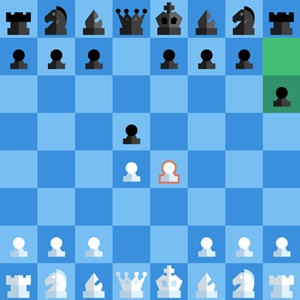
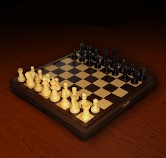
Chess is a classic board game where you need strategic thinking to win. Move each piece, outmaneuver your opponent, and improve your thinking skills.
Introduction to Chess
Chess is a classic strategic board game for two players, where each player controls 16 pieces with the goal of checkmating the opponent's king. Besides sharpening intellectual skills, it also develops logical thinking, strategic planning, and the ability to anticipate the opponent's moves. Similar to Ultimate Tic Tac Toe, it requires two players, each needing a strategy to quickly achieve victory.
Chess uses two colors of pieces: white and black, with pieces including the king, queen, rook, knight, bishop, and pawn. Each piece has its own unique movement, creating countless strategies and complex situations on the board.
Chess is suitable for all ages, from beginners to professional players. The game is both entertaining and a tool for developing thinking skills, strategy, and patience.
Chess rules
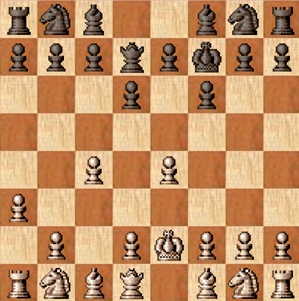
Chess is a two-player game, each controlling 16 pieces on an 8x8 square board. The objective is to checkmate the opponent that is, to place the opponent's king in a position where it is under attack and cannot escape.
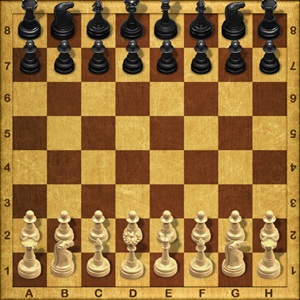
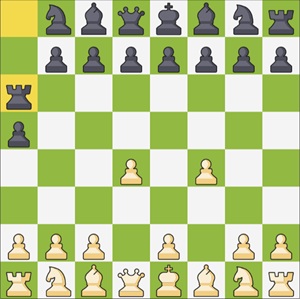
Piece setup
- Each player has 16 pieces: 1 king, 1 queen, 2 rooks, 2 knights, 2 bishops, and 8 pawns.
- Piece colors: White moves first, black moves second.
- Piece arrangement: The first row consists of pawns, and the second row consists of the stronger pieces.
Piece movement
- King: Moves one square in any direction.
- Queen: Moves any number of squares horizontally, vertically, or diagonally.
- Rook: Moves any number of squares horizontally or vertically.
- Bishop: Moves any number of squares diagonally.
- Knight: Moves in an L-shape, two squares in one direction and one square in a perpendicular direction, and can jump over other pieces.
- Pawn: Moves one square forward, captures diagonally. On its first move, it can move two squares. When it reaches the opposite end of the board, it can be promoted to any piece except the king.
Check and checkmate
- Check: When the opponent's king is under direct attack. The player must move the king or use another piece to block/capture the attacking piece to escape.
- Checkmate: When the king is in check and there are no valid moves to escape. The game ends, and the player who delivered the checkmate wins.
Some additional rules
- Castling: Moving the king two squares towards a rook and placing the rook next to the king. This is only allowed if neither the king nor the rook has moved and the squares between them are not under attack.
- En Passant: A pawn can capture an opponent's pawn that has just moved two squares from its starting position if it is adjacent to the capturing pawn.
- Draw: Occurs when neither side has enough pieces to checkmate, the same position is repeated three times, or 50 consecutive moves have been made without a capture or a pawn move.
Conclusion
Chess is a classic chess game where you can fully exercise your creative thinking through challenging matches against dangerous opponents. Use smart tactical calculations to quickly achieve checkmate and score high points.
With this strategic gameplay, you can play easily with the calculations you make. Each piece has its own movement strategy, so don't be overconfident and let your opponent defeat you.