
4
ratings
5
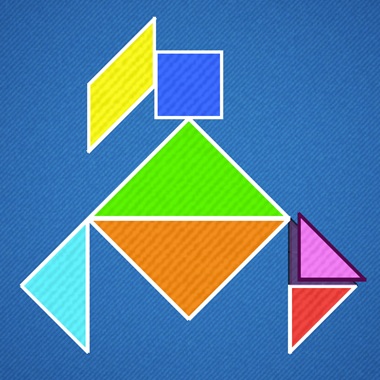
Blockudoku

Maze Paint

Sudoku
Blockbuster Puzzle
Tentrix
Tic Tac Toe Online

Tic Tac Toe

Wordle
Chess
Strategic Tic-Tac-Toe
Chess Master 3D
Giant Tic Tac Toe
Block Blast
Sliding Puzzle
Math Cross
Blocky Rush

Idle Breakout
Block Buster
Wordle Classic
Uno Online

10x10
Block Breaker King
Block Champ
Master Chess
Tic Tac Toe Puzzle
Tangram Puzzle
Sandtrix

Blocks 8
2048
Pocket Chess
Four Colors
Chess Multiplayer
Bookworm
Word Tac Toe
Sand Blast
Block Breaker
2048 Cupcakes

Drop Blocks
Pop It 3D

Hexa Puzzle

Bricks Breaker
Chess Battle
Sudoku Puzzles
Classic Sudoku
Xmas Block Blast
Block Blast 2048
Simple Block Puzzle
Gummy Blocks
Words Search Classic

Block Jam
Wordly

Wordoku
Brain Test

Ocho

Solitaired

Candy Crush

Tangram Puzzle
Tangram Puzzle is a creative and colorful geometric puzzle game. Calculate and place the pieces on the board correctly to achieve the highest score.
Discovering intellectual puzzles
Tangram Puzzle is a classic puzzle game designed to develop intelligence, logical thinking, and creativity. The game uses 7 basic puzzle pieces. Your task is to arrange these pieces to form different shapes according to a pattern without overlapping. Additionally, Hexa Puzzle is one of the most challenging puzzle games you can try to quickly improve your skills and win.
Game objectives
- Develop spatial thinking: You must imagine how the pieces combine to form a complete shape.
- Train logic and problem-solving: Each challenge requires strategic thinking to choose the correct position for each piece.
Basic gameplay
- Choose a pattern: Start with simple shapes, for example, a square or a large triangle.
- Complete the picture: When all the pieces fit the pattern without overlapping, you've won the challenge.
Tips for winning quickly
- Start with the larger pieces first, then assemble the smaller ones.
- Use your thinking skills to utilize the empty space.
- Observe the outline of the pattern to easily position the pieces.
- Experiment with different arrangements; don't hesitate to take it apart and try again if it doesn't fit.
Strategies for solving tangrams quickly
Solving Tangram puzzles quickly isn't just about assembling the shape; it also requires strategic thinking and keen observation.
Start with large pieces and fixed corners
- Prioritize large pieces: Large triangles or squares usually take up a lot of space; placing them first makes it easier to fill the remaining gaps.
- Find the corners and edges: Identify the pieces that fit the corners or edges of the pattern, thereby defining the basic structure.
Utilize flexible thinking skills
- Try different rotations: Each piece can be flipped or rotated to fit the pattern. Don't limit yourself to just placing it in the original orientation.
- Observe the empty space: Determine the shape of the empty space and choose the appropriate piece, then flip and rotate it to fit precisely.
- Combine intuition with logic: Sometimes the eye spots the correct orientation faster than trying all possibilities; combining both significantly speeds things up.